
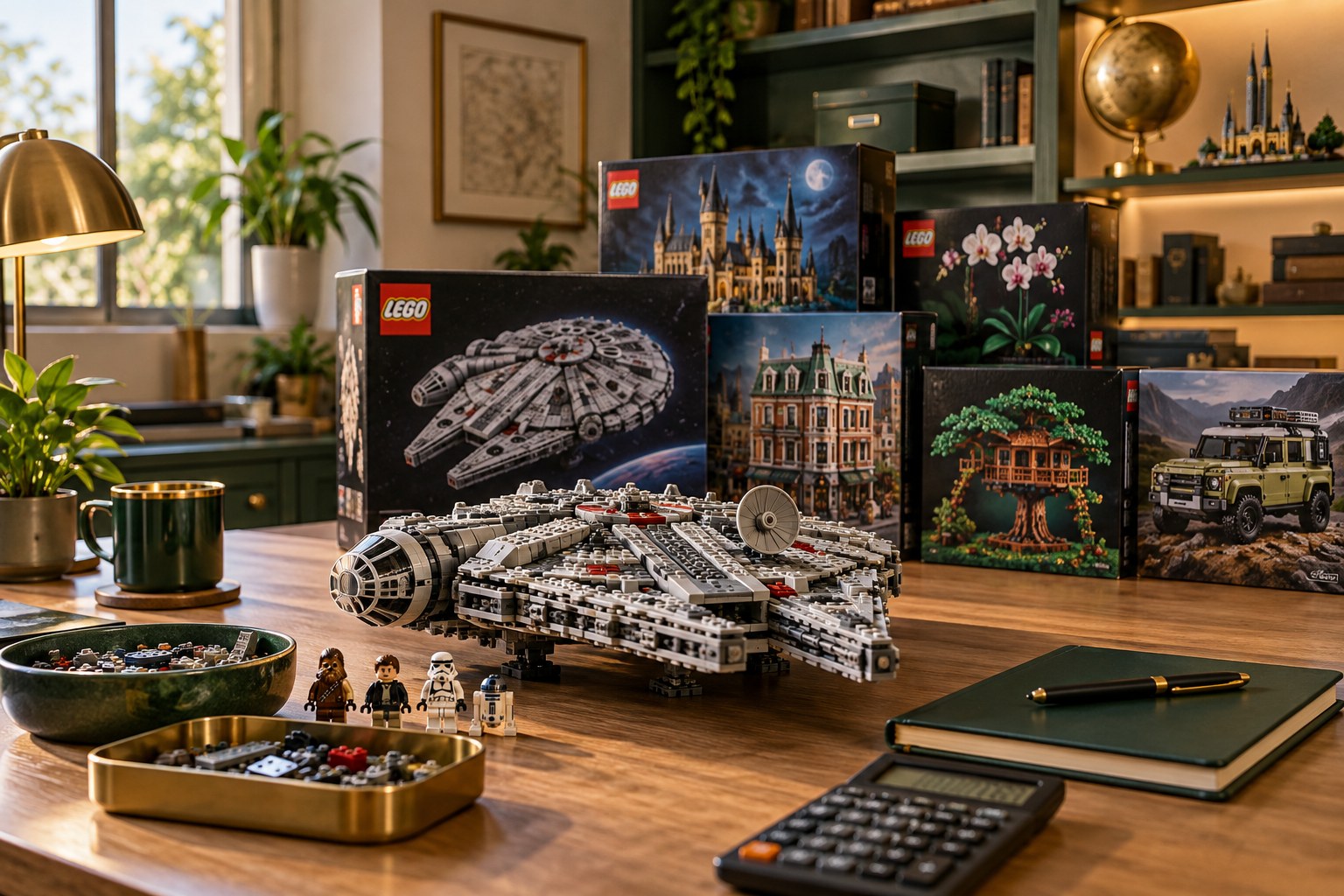
LEGO Investing: 3 Retired-Set Case Studies
LEGO Investing: 3 Retired-Set Case Studies
The Thrifty Millionaire | Millionaires Never Pay Full Price.
LEGO investing turns a familiar shopping decision into a different question: what might a future collector pay for the set you buy today? The opportunity comes from finding lasting demand before retail supply disappears. Your purchase price, condition, and patience determine how much of that opportunity you keep.
Think of a sealed set as a tiny collectible property. You choose the right location—in this case, the theme and model. You buy at a sensible price, protect what makes it desirable, and wait for a buyer who values it. Unlike a rental house, however, the box produces no rent while you hold it.
Some retired sets have risen far above their original prices. Three examples show how that happens, why similar sets can perform differently, and how a discount can change the investment math.
How LEGO Investing Creates an Opportunity
While a set is widely available, collectors can compare your asking price with a retailer’s. Once normal retail supply runs out, buyers have fewer options. Meanwhile, some original owners open their boxes, build the models, lose pieces, or damage the packaging.
That can reduce the supply of collectible examples. If new fans still want the exact set, the remaining copies may attract a premium. Yet retirement only changes one side of the equation. Demand must remain strong enough to support a higher price.
Look for a clear reason that a future collector would choose this model: a distinctive design, a memorable subject, appealing figures, or a place in a collection. These are research questions, rather than guarantees that any particular set will appreciate.
Thrifty Millionaire rule: Buy a reason for future demand, not just a retirement rumor.
Three LEGO Investing Case Studies at a Glance
The snapshot below compares original U.S. retail prices with PriceCharting’s “New” guide estimates reviewed on October 18, 2026. They are nominal price comparisons before costs, not realized investor returns. Guide estimates can change and may include imperfectly classified sales.
| Retired set | U.S. retail | “New” guide | Price change |
|---|---|---|---|
| Kessel Run Millennium Falcon #75212 |
$169.99 | $298.44 | +75.6% |
| Ultimate Collector’s Millennium Falcon #10179 |
$499.99 | $2,108.69 | +321.7% |
| Old Fishing Store #21310 |
$149.99 | $430.00 | +186.7% |
Price change = (guide estimate ÷ original retail price − 1) × 100. “New” is the guide’s condition category. None of these figures establishes a gain during the retirement year. Sources are linked in each case below.
Case 1: Kessel Run Millennium Falcon #75212
This is the blue-and-white Falcon associated with Solo: A Star Wars Story. LEGO’s official product page lists its $169.99 U.S. price and retired status. Its movie-specific appearance gives collectors a reason to distinguish it from other Falcons.
PriceCharting’s guide and sales records show why broad claims need care. Its “New” estimate is about 1.76 times original retail. September 2026 records include listings described as new or sealed recorded at $300 and $374.99.
The higher result exceeds twice retail; the guide estimate does not. Also, these are years-later observations, not proof of doubling in its retirement year. We did not independently verify each underlying transaction.
Investment lesson: Research the exact set number and condition. A distinctive version can command interest, but one exceptional sale should not set your entire forecast.
Case 2: Original UCS Millennium Falcon #10179
The 2007 Ultimate Collector’s Falcon is the larger long-term example. BrickEconomy’s catalog records its $499.99 U.S. retail price and its later replacement by #75192 in 2017.
PriceCharting’s “New” guide estimate is $2,108.69, roughly 4.22 times original retail. That is a substantial nominal increase across a long span. It is not a 322% annual return.
However, edition and condition matter. An original first-edition package, a later production copy, and an assembled model are different comparisons. A newer Falcon also gives buyers another way to own the subject.
Investment lesson: An iconic collectible can retain demand for years. Still, study the holding period, competing versions, and the condition behind the price. The strongest historical winner is not an automatic template for the next purchase.
Case 3: Old Fishing Store #21310
LEGO investing also extends beyond spacecraft. The Ideas Old Fishing Store offers a detailed coastal building with display appeal. LEGO’s product page confirms its $149.99 U.S. price and retired status; its launch announcement dates the release to September 2017.
The PriceCharting snapshot places its “New” estimate at $430, about 2.87 times retail. Reported new/sealed sales include $411.60 on August 6, 2026, and $445 on July 31, 2026.
Those observations support a multi-year appreciation case. They do not identify when the set first doubled. My interpretation is that the building’s distinctive design gives buyers a reason to seek this particular model.
Investment lesson: Look beyond famous licenses. A memorable building can attract collectors, but assess the design and buyer demand individually.
The Parable of Two Buyers and One Falcon
Imagine two buyers finding the same sealed set. Alex pays $170. Morgan waits for a sale and pays $120. Both eventually sell for $300 and incur $50 in selling and delivery costs.
Alex has $80 left above the purchase price. Morgan has $130. Their returns before other expenses are about 47% and 108%, respectively. This is a hypothetical comparison, not a record of an actual Falcon purchase.
The future buyer paid the same price. Morgan’s better result came from the lower entry cost. That is the Thrifty Millionaire advantage: you do not control tomorrow’s market, but you can control today’s limit.
Purchase tax, storage, packing, returns, labor, and taxes on profit could reduce both outcomes. Therefore, include your own costs before treating any price increase as money earned.
The collectible may appreciate while you wait. Your margin starts when you buy.
Build a LEGO Investing Plan Before Buying
First, write down why you expect demand to persist. Identify the exact set number, likely buyer, competing versions, and the evidence that supports your view. Then check multiple comparable completed sales.
Next, set a maximum all-in purchase price. Include tax and inbound delivery. Work backward from conservative sale proceeds after fees, packing, outbound shipping, and an allowance for problems.
- Buy selectively: A discount helps only when the underlying set has a sensible resale case.
- Separate conditions: Factory-sealed, opened-box, and used-complete examples need different comparisons.
- Plan the hold: Decide when you will reassess demand and when you may need your cash back.
- Watch replacements: A remake can change the choices available to future collectors.
- Track every result: Record losing purchases and unsold sets alongside the winners.
Finally, ask what must happen for your plan to work. If you need the highest observed sale, free storage, and zero returns to make money, your buying limit is probably too high.
Protect the Asset You Expect to Sell
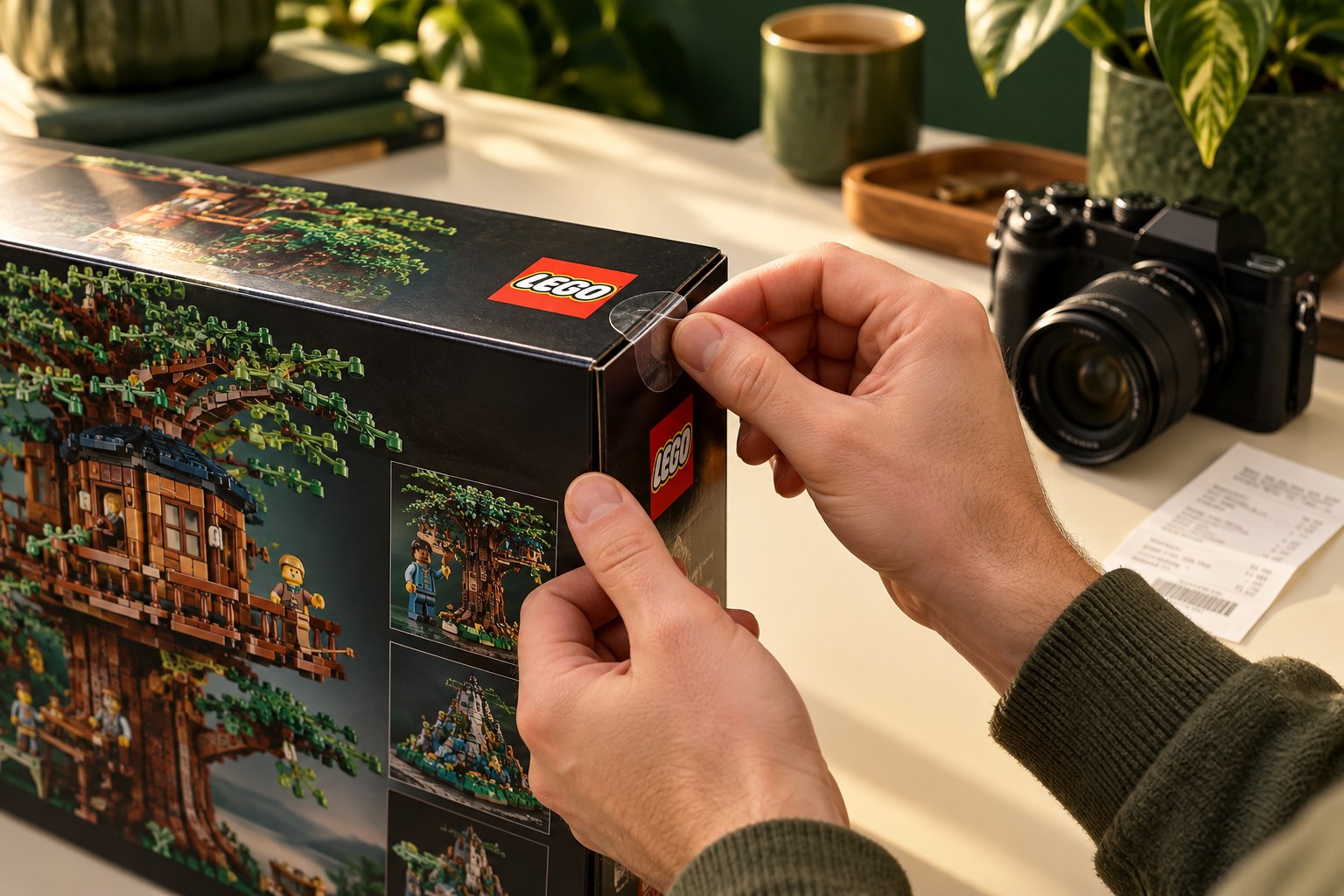
A collector may pay for the original package as well as the bricks. Photograph seals and box condition when you buy. Keep receipts and store sets in a clean, dry place away from direct sunlight, leaks, and crushing weight.
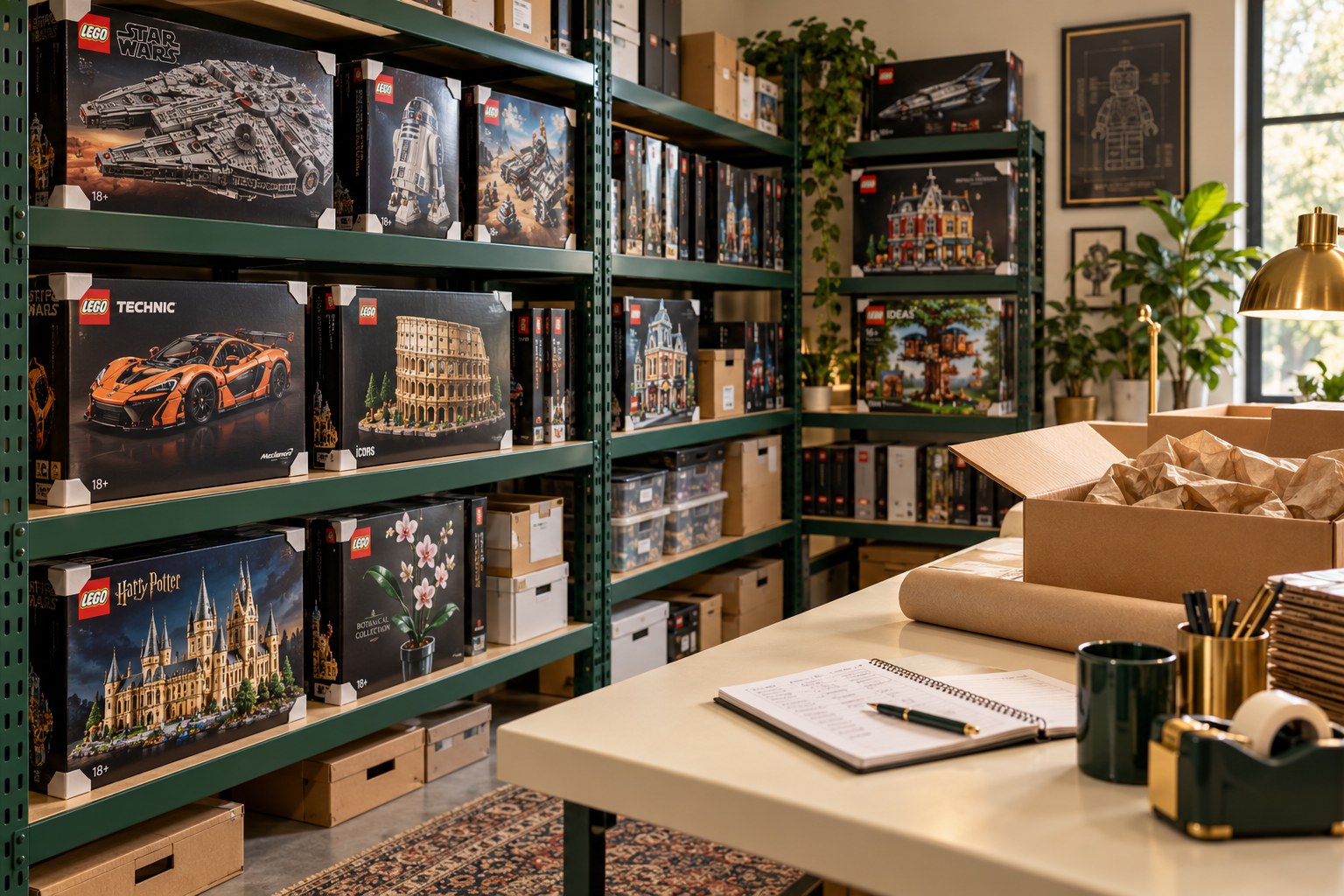
Also, measure your storage and shipping space before buying several large sets. A closet full of boxes ties up both room and money. Price the shipping carton before a bulky bargain comes home.
Measure Time as Carefully as Price
Doubling in one year is very different from doubling in ten. A hypothetical investment that doubles over five years grows about 14.9% a year before costs. Double over ten years, and the equivalent annual rate is about 7.2%.
Use your actual purchase and sale dates, rather than automatically counting from retirement. Money spent years before a set leaves stores was already tied up during that waiting period.
Also, remember that these three case studies were selected because they show appreciation. They are not a representative portfolio. Studying only winners can make a strategy look easier than it is.
Research reaches different conclusions too. One study of 1987–2015 data reported average LEGO returns of at least 11%. A different study accounting for survivorship bias reported a 1.20% annual inflation-adjusted return for its value-weighted index over 1966–2018. Different samples and methods produce different answers; neither result promises your future return.
Invest With a Thesis, Buy With Discipline
LEGO investing can reward knowledge, a good entry price, and patient ownership. The Falcons and Old Fishing Store show why collectors study retired sets. The two-buyer example shows why paying less can matter as much as choosing a winner.
Start small, keep money for near-term needs available, and treat collectibles as one part of a broader plan. The goal is to make a purchase you can explain, protect, and eventually sell on sensible terms.
Research the set → Buy below your limit → Protect condition → Review demand → Sell with a plan.
Millionaires Never Pay Full Price. Smart LEGO investors know what they paid, why they bought, and what the exit will cost.
Research reviewed October 18, 2026. U.S. dollars unless stated otherwise. Guide values are estimates, reported sales are not independently authenticated here, and actual results vary. Figures exclude inflation and investor-specific costs unless identified. Independent editorial article; not affiliated with or endorsed by the LEGO Group. Collectible values can fall.