
Shrink the Leak: Why Thrifty Millionaires Never Pay Full Price
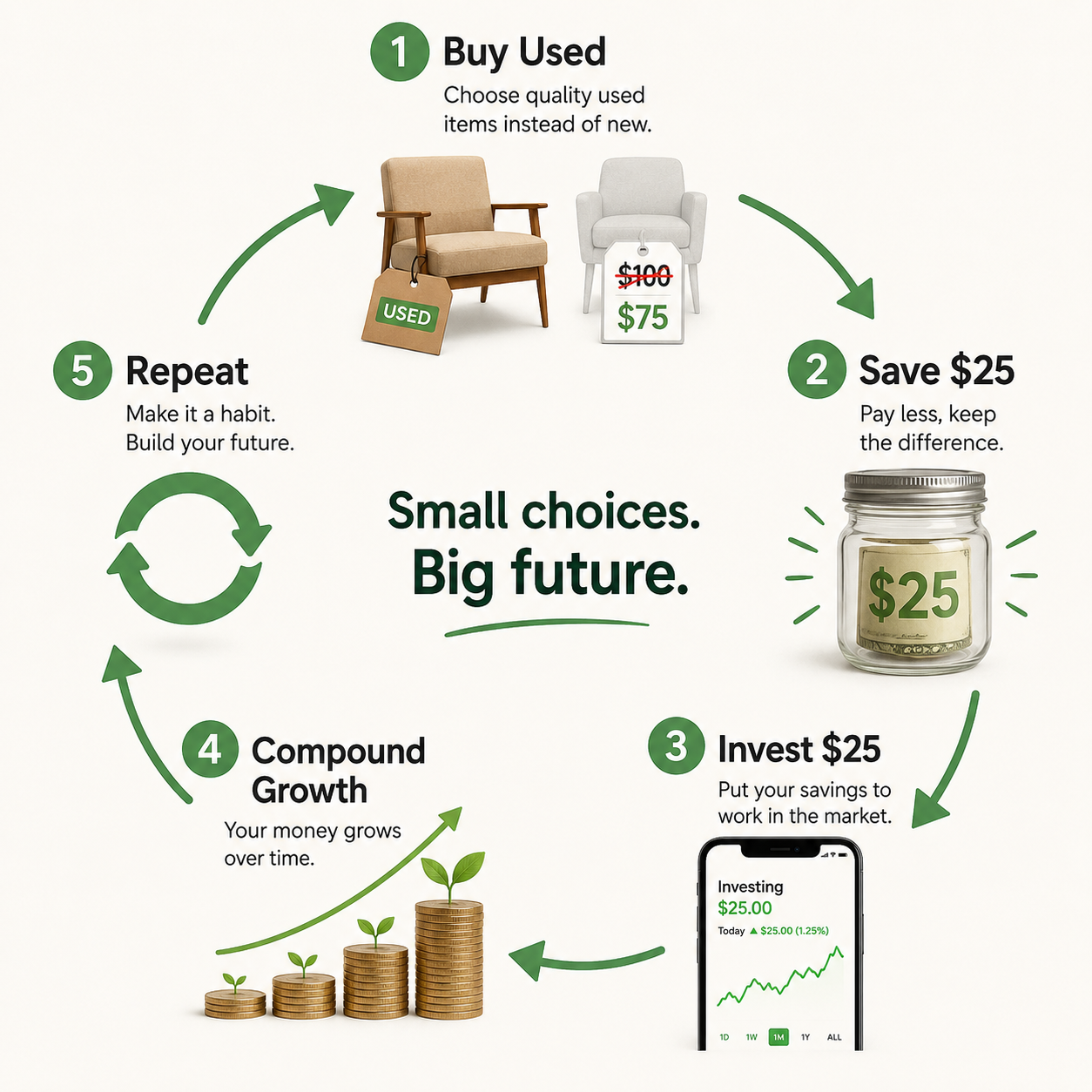
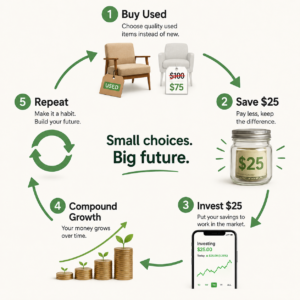
The fastest way to build wealth isn’t earning more—it’s letting less money leave your household. Every time you pay full price for something that will be used once, worn out, or replaced in a year, you’re choosing depreciation over compounding. The thrifty millionaire flips that mindset. Instead of defaulting to big-box stores like Target or Walmart, they ask a better question: “Can I get this cheaper—or smarter?” That’s where thrift stores, resale shops, and secondhand markets come in. The difference might only be $20–$30 per purchase, but those savings add up fast. Invested over time, that “small” money becomes real wealth. Millionaires Avoid Paying Full Price.
One of the easiest places to start is with everyday items—especially kids’ toys. Kids don’t care if something is new; they care if it’s fun. Thrift stores are full of barely-used toys, often priced under $5. Half the experience is the hunt—letting your kids explore, test things, and pick something they’re excited about. It’s cheaper, more engaging, and often more rewarding than grabbing something off a shelf at full price. But the real opportunity goes beyond saving—you can also create income. Many thrift stores carry underpriced items that can be resold on platforms like eBay or Facebook Marketplace. With a little practice, you’ll start spotting value others miss.
The Thrift-to-Wealth Loop Builder
📌 6 Easy Ways to Save at Thrift Stores
- Shop kids’ toys first (high turnover, low prices)
- Look for brand-name clothing with tags still on
- Check small appliances and test them in-store
- Visit stores in higher-income areas (better inventory)
- Go early morning Saturday morning or after 3pm (lake afternoon restock), go weekdays after work and most of all go to different stores.
- Learn resale value for common flip items (electronics, shoes, tools, clothing, toys whatever you have knowledge of or are into. )
📌 Monthly Grocery Bill
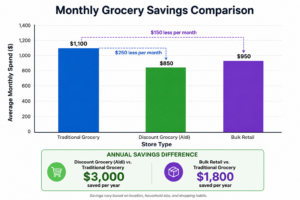
Your grocery bill is the next major opportunity. The average U.S. household spends roughly $900–$1,200 per month on food (not $1,600 unless dining out heavily is included). That’s a massive outbound cash flow—and one of the easiest to optimize. Thrifty millionaires don’t sacrifice quality—they change where and how they shop. Stores like Aldi consistently offer lower prices on staple items compared to traditional grocers. The difference across a full cart can easily hit $100+ per trip. Multiply that weekly, and you’re looking at thousands per year. Simple swaps—store brands, bulk buying, and cutting food waste—can dramatically reduce costs without changing your lifestyle.
📊 Infographic #2: Grocery Cost Comparison Prompt
📌 Ways to Shrink Your Grocery Bill
- Shop at discount grocers like Aldi first
- Buy store brands (often same suppliers, lower cost)
- Plan meals to reduce waste
- Avoid impulse buys (shop with a list)
- Buy in bulk for non-perishables
- Limit convenience foods and delivery
The final—and most overlooked—category is household recycling as income. Most people literally throw money away every week. The average American uses and discards hundreds of aluminum cans per year, and those cans have real value. At roughly $0.50 per pound, collecting and recycling about 240 pounds annually can generate around $120 in extra income—money that would have otherwise gone straight into the trash. (And let’s be honest—your garbage shouldn’t have a higher net worth than your brokerage account.) Beyond aluminum, scrap steel—often left at curbs across the country—is worth around $0.05–$0.10 per pound at most yards. It’s not glamorous, but it adds up. The real opportunity comes from non-ferrous metals—materials that don’t contain iron, like copper and brass. These are far more valuable and commonly found in household items, old fixtures, wiring, and appliances. Being on the lookout (BOLO) for these materials can turn everyday waste into a small but consistent income stream.
📌 What to Look For in Scrap Metal Recycling
- Aluminum cans (lightweight, high volume)
- Steel items (appliances, frames, tools)
- Copper (wiring, pipes)
- Brass (fixtures, fittings)
- Old electronics (hidden valuable metals)
When you combine all three strategies—thrifting, cost reduction, and recycling income—you create a powerful system. You’re not just saving money; you’re redirecting it into assets that grow. That $20 saved at a thrift store, $200 saved on groceries, and $120 earned from recycling isn’t small—it’s fuel. Invested consistently, it compounds into thousands over time. This is how the thrifty millionaire operates: quietly, efficiently, and intentionally. They don’t chase wealth—they build it by controlling what leaves their household and making every dollar work harder.
Millionaires Don’t Pay Full Price—They Build Wealth With the Difference.