
Thrifty Millionaire: If You’re Not Investing, You’re Being Left Behind.
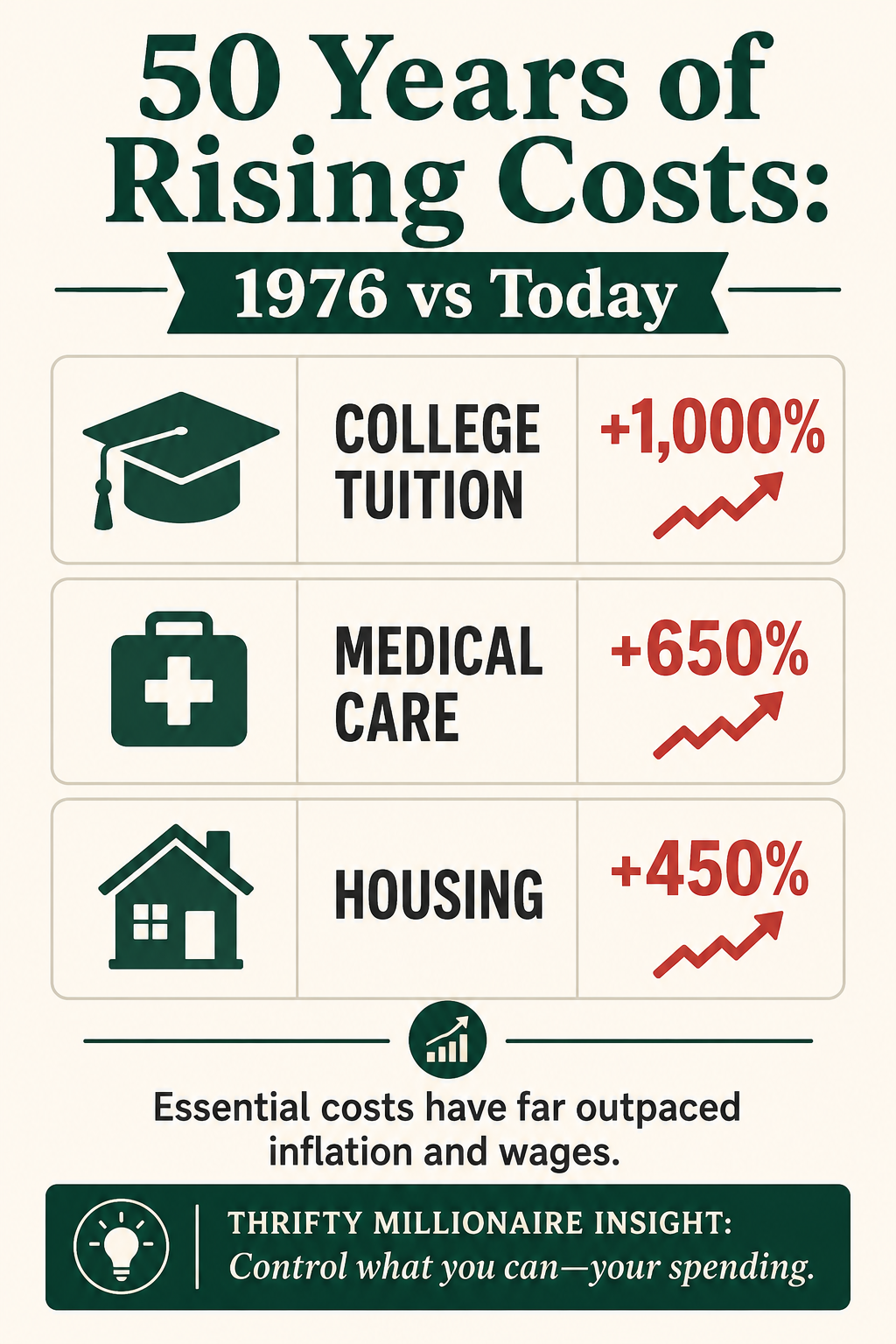
Over the last 50 years, the financial reality for the average American has quietly—but dramatically—shifted. What used to be manageable expenses have exploded into overwhelming burdens. Since the mid-1970s, college tuition has surged by roughly 1,000%, medical care has climbed over 650%, and housing prices have increased by nearly 450%. These are not luxury categories—these are the foundational pillars of life. While inflation alone explains part of the rise, these essential costs have far outpaced it, fundamentally changing what it means to “get by” in America.
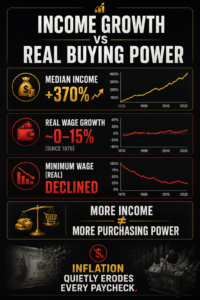
Now let’s look at the other side of the equation—income. On paper, it appears wages have grown. Median household income has increased from roughly $16,000 in the mid-1970s to around $75,000 today. But that number is misleading. Once you adjust for inflation, real wage growth has barely moved—hovering somewhere between flat and modest gains over five decades. In some cases, such as minimum wage earners, real purchasing power has actually declined. The truth is simple: workers are earning more dollars, but those dollars are worth significantly less.
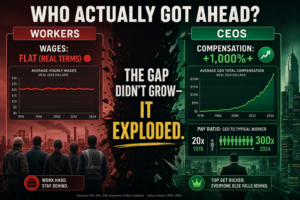
Meanwhile, at the top of the economic ladder, the story is completely different. CEO compensation has skyrocketed, increasing over 1,000% since the 1970s. The ratio of CEO pay to the average worker has ballooned from roughly 20-to-1 to as high as 300-to-1 or more. This isn’t just growth—it’s a complete divergence. While the average worker struggles to keep pace with rising costs, those at the top are accelerating far beyond inflation, wages, and the broader economy.
What this creates is a silent squeeze. The cost of living compounds upward, wages stagnate in real terms, and the value of savings erodes year after year due to inflation. This is why so many people feel like they’re working harder but getting nowhere. It’s not a feeling—it’s math. If your money isn’t growing faster than inflation, you are losing purchasing power every single year.
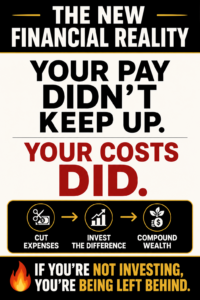
This is where the Thrifty Millionaire mindset becomes critical. You don’t win this game by simply earning more—you win by owning assets that grow. Stocks, real estate, and investments compound over time, often outpacing inflation and wage growth. The gap between those who invest and those who don’t widens every year, just like the gap between wages and costs.
The formula is simple, but powerful: cut unnecessary expenses, redirect that money into investments, and let time and compounding do the heavy lifting. Every dollar you save and invest becomes a worker that never sleeps, never takes a break, and grows alongside the very system that’s driving costs higher.
At the end of the day, the conclusion is unavoidable. The system has changed. Costs rise aggressively. Wages lag behind. Wealth concentrates at the top. And the only reliable way to keep up—let alone get ahead—is to participate in asset growth.
If you’re not investing, you’re not standing still… you’re being left behind.